
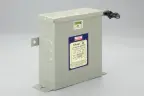
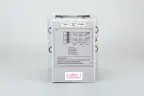



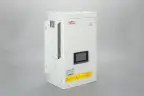
For decades, an Automatic Power Factor Correction (APFC) panel was a simple, dependable investment: connect capacitors, improve power factor, cut penalties on the electricity bill. But today’s plants look very different. VFDs, servo drives, UPS systems, LED lighting, SMPS and PLC-driven machines have filled factory floors with non-linear loads. In this environment, a plain capacitor bank can quietly turn from a money-saver into a source of trouble.
The hidden problem: harmonics meet capacitors
Non-linear loads draw current in pulses rather than smooth sine waves. This creates harmonic currents, most commonly the 5th, 7th and 11th orders, that flow through your network and distort the voltage.
Capacitors react badly to this. Their impedance falls as frequency rises, so a capacitor bank acts as an easy path for harmonic currents. Worse, the capacitor bank and the supply transformer’s inductance together form a resonant circuit. If the resonant frequency of this combination lands close to a dominant harmonic, even a modest harmonic current can be amplified many times over.
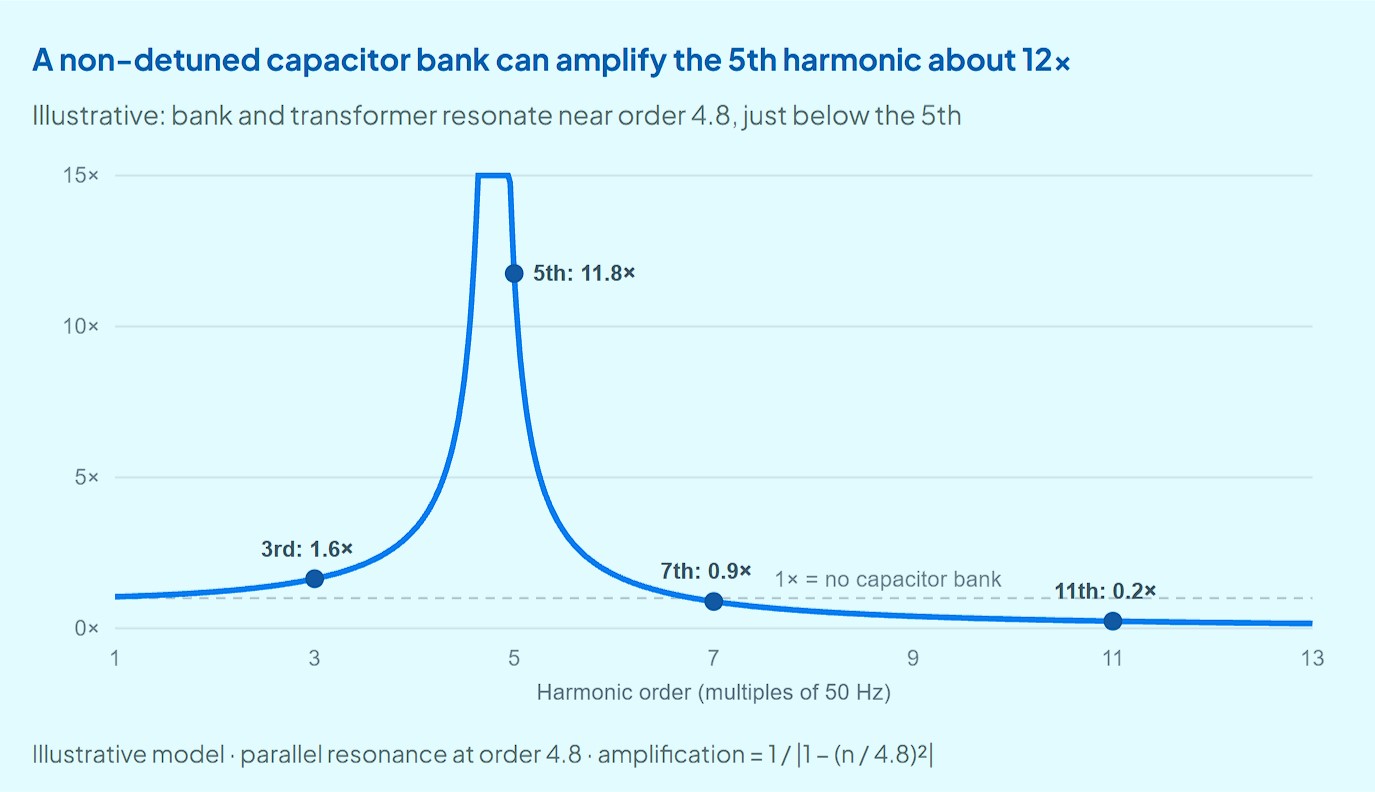
When the bank’s resonance sits close to a harmonic your loads produce, that harmonic current is multiplied on its way into the supply, not reduced.
Warning signs in your plant
- Capacitors failing repeatedly or bulging well before their expected life
- Capacitor contactors burning out or welding
- Nuisance tripping of breakers, MCCBs or fuses on capacitor feeders
- Overheating of transformers, cables and neutral conductors
- Unexplained drive faults or malfunctioning sensitive electronics
- High voltage THD readings during a power quality audit
If you recognise any of these, a non-detuned APFC panel in a harmonic-rich environment is a prime suspect.
The solution: detuned (reactor-connected) capacitor banks
A detuned APFC panel connects a series reactor with each capacitor stage. The reactor shifts the resonant frequency of the combination well below the lowest significant harmonic, so resonance with the network cannot occur at the 5th harmonic and above. The bank behaves as an inductive path to harmonics instead of a sink for them, protecting the capacitors while still delivering reactive power compensation at the fundamental frequency.
Common detuning choices include:
| Reactor | Tuned near | Typical use |
|---|---|---|
| 5.67% | 210 Hz (50 Hz system) | Widely used where the 5th harmonic is dominant |
| 7% | 189 Hz | A popular choice for general industrial use |
| 14% | 134 Hz | Used where the 3rd harmonic is significant |
The right choice depends on your harmonic profile, which is why measurement should come before selection.
What else matters when specifying an APFC panel
- Capacitor voltage rating: reactors raise the voltage across the capacitor, so capacitors must be rated for it.
- Capacitor technology and quality: heavy-duty, self-healing capacitors with proper safety features.
- Thyristor or fast-switching options: for fast-fluctuating loads such as welding or cranes.
- Controller quality: accurate sensing and a sensible switching sequence to avoid hunting.
- Thermal design: adequate ventilation and temperature protection for reactors and capacitors.
When detuning is not enough
Detuned APFC panels protect your capacitors and avoid resonance, but they do not remove harmonics from the system.
Where harmonic levels are high, for example in plants dominated by VFD loads, the next step is Active Harmonic Filters (AHF). An AHF measures the load current in real time and injects a compensating current, actively cancelling harmonics. For sites that need both fast reactive compensation and harmonic mitigation, Static Var Generators (SVG) and hybrid solutions combining active and passive technologies offer a complete answer.
A practical roadmap
- Measure first. Conduct a power quality audit capturing harmonics (current and voltage THD), power factor, load profile and transformer loading.
- Check your existing APFC. Is it detuned? Are the capacitors healthy? Is there any resonance risk?
- Select the right technology. Detuned APFC for moderate harmonics; AHF, SVG or a hybrid panel where harmonics are significant or loads fluctuate rapidly.
- Choose a partner with application experience. The right design depends on real site data, not catalogue assumptions.
Why Subodhan Engineers
Since 1993, Subodhan Engineers has grown from a capacitor manufacturer into a complete power quality solution provider. With our head office in Pune and two manufacturing facilities at Baramati and Goudhara, we are an ISI-marked and ISO 9001 certified company. Over 33 years, we have supported industries with APFC panels, harmonic filters, active solutions and responsive technical service.
1993
Power quality since
2
Plants: Baramati and Goudhara
ISI · ISO
Marked and certified