
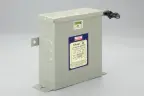
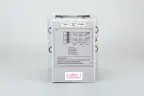



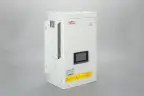
Active Harmonic Filter
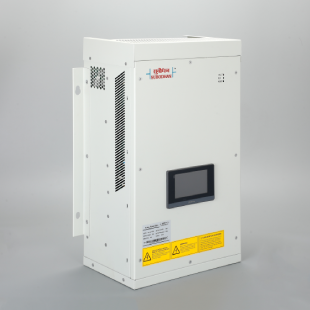
Product overview
Key benefits
Dynamic compensation
For changing nonlinear loads.
Selected harmonics reduced
Reduction of selected harmonic current components.
Better power quality
Support for improved electrical power quality.
Modular configurations
For suitable new and existing installations.
Multiple functions
Potential for combined harmonic, reactive-power and load-balancing functions, depending on the model.
What is an Active Harmonic Filter?
An Active Harmonic Filter is a power-electronic device used to reduce harmonic currents produced by nonlinear electrical loads. Such loads draw current in a non-sinusoidal pattern, which can contribute to voltage distortion, additional heating and electrical-system inefficiencies.
Unlike a passive filter designed around specific electrical characteristics, an AHF uses electronic measurement and control to respond dynamically to changing load conditions. It is particularly useful where the load profile changes throughout the production cycle or multiple types of nonlinear equipment operate simultaneously.
How does an AHF work?
Detect
The system measures electrical current using suitable current transformers (CTs) and identifies harmonic components.
Calculate
The control system analyses the measured current and determines the compensation required for the selected operating mode.
Compensate
The converter injects an opposing compensation current to reduce targeted harmonic components at the selected connection point.
Technical note: Resulting performance depends on filter capacity, harmonic spectrum, CT placement, system impedance, connection arrangement and operating conditions.
Why choose Subodhan AHF solutions?
Dynamic performance for changing loads
An active filter can adjust its compensation as machines start, stop or change operating speed.
Suitable for modern industrial loads
AHF solutions can be considered for VFDs, UPS systems, rectifiers, switching power supplies and other nonlinear loads.
Designed around the application
Selection should consider the measured harmonic spectrum, maximum compensation current, transformer and feeder configuration, load diversity and installation space.
Potential for multiple power-quality functions
Depending on configuration, an active filter may also support reactive-power compensation or three-phase current balancing.
Typical applications
Applications
Application
Typical loads
VFDs and motor drives
Pumps, compressors, blowers and process motors
Data centres and UPS systems
Power-electronic loads and critical distribution systems
Automotive and automation
Automated production lines and electronic equipment
Water and process industries
Pump stations, treatment plants and process drives
Other potential sectors
Steel and metal processing, textiles, pharmaceuticals, paper mills, cement plants, consumer electronics manufacturing and industrial panel installations
AHF product features
Features
- Active current compensation for selected harmonic components
- Flexible system configurations based on network voltage, phase arrangement and installation requirements
- Expandable capacity through parallel operation where supported by the selected model
- Monitoring, alarms and protective functions as provided by the product
- Communication options for plant monitoring where supported
- Panel integration through module-based or cabinet-based implementation according to the approved design
Technical specifications
Active Harmonic Filter (AHF)
Industry
Typical loads
Product
Active Harmonic Filter
Application
Harmonic current mitigation
System
Three-phase LV electrical distribution
Voltage options
200 / 400 / 480 / 690 V classes, subject to model availability
Current ratings
50–200 A module range, subject to model availability
Compensation functions
Harmonic mitigation; optional reactive-power compensation or load balancing where supported
Harmonic range
Supported harmonic orders as per the selected model datasheet
Cooling
As specified for the selected module or cabinet
Communication
Supported interfaces and protocols as per the selected model
Installation
Panel-mounted, wall-mounted or cabinet-integrated, as available
AHF selection guide
Configurations available
- Measure load current and harmonic spectrum under representative operating conditions.
- Identify dominant harmonic orders and the required reduction.
- Determine the harmonic compensation current required at the intended connection point.
- Check system voltage, three-phase configuration, CT ratio and placement, fault level and installation conditions.
- Confirm the filter rating, number of modules and additional functions required.
Results depend on the actual network and the agreed measurement location.
Frequently asked questions
Which loads generally require an AHF?
VFDs, UPS systems, rectifiers and switched-mode power supplies can generate harmonic currents. Electrical measurement helps determine whether active filtering is appropriate.
Can an AHF operate with an APFC panel?
Does an AHF improve power factor?
How do I determine the correct AHF rating?
Need the right fit for your system?
Get the full specifications or talk to our team.